
Reasons to fall in love
What makes this place special.
- Watch elephants whose red coats reveal their relationship with Tsavo’s iron-rich soil, dust and water.
- Explore the Galana River’s contrast with Tsavo East’s dry plains and the long geological story of the Yatta Plateau.
- Discover dry-country birds, giraffes, antelope and predators within an ecosystem shaped by changing rainfall.
- Experience the contrast between Tsavo East’s open horizons and Tsavo West’s lava flows, hills and Mzima Springs.
A landscape written on the skin
Where the Earth Colours the Elephants
An elephant crossing pale grass might first register as a moving patch of rust. Then the shape resolves: a swinging trunk, broad ears, the measured placement of enormous feet. The Tsavo red elephants are not a separate kind of elephant. They are African savanna elephants wearing their surroundings, their normally grey skin coated in the reddish soil that gives much of this Kenyan landscape its distinctive palette. The animal and the country seem briefly inseparable.
That colour is the beginning of a richer story, not simply a photographic curiosity. Dusting and mud bathing help elephants care for their skin, offering protection from strong sun and biting insects. A trunk can gather loose earth and throw it over the shoulders; mud dries into a textured coat. Depending on recent rain, the ground beneath them and their last bath, elephants may appear intensely red, softly ochre or closer to their underlying grey.
Tsavo lies in southeastern Kenya, where broad stretches of dry savanna meet river corridors, rocky outcrops and volcanic country. Its two national parks, East and West, share a name but reward different kinds of looking. The eastern landscape often opens outward beneath a great sky; the western landscape folds into hills and darker rock. Together they make the elephants’ red coats feel less like an isolated spectacle and more like an introduction to an entire world.

Beyond the colour
Reading an Elephant Encounter
The most rewarding elephant encounters are often about relationships rather than dramatic movement. A calf may walk beneath the sheltering bulk of an adult, its small trunk still developing coordination. Members of a family group pause, touch or adjust their pace around one another. Elephant society is built on enduring bonds, and watching a group travel can reveal how closely its members attend to each other without anything resembling a performance.
Feeding offers another window into their lives. Elephants gather grasses, strip leaves and browse woody vegetation, using a trunk capable of both strength and delicate selection. Their movements connect patches of food and water across considerable distances. In doing so, they disperse seeds and change vegetation, opening some spaces while affecting the growth of others. They are not merely occupants of Tsavo’s scenery; they help shape the conditions in which other animals live.
Give these encounters room to unfold. Vehicles should not crowd a family, separate its members or obstruct its direction of travel. An elephant’s pause or change of posture deserves attention, not an attempt to force a closer photograph. Quiet observation from a respectful distance makes small details easier to notice: dust slipping from an ear, a trunk testing the air, the contrast between a calf’s quick steps and an adult’s steady stride.
Water through dry country
The Galana River and the Long View
In Tsavo East, the Galana River brings a different rhythm to the surrounding dry country. Vegetation gathers along its course, and its banks offer a striking contrast with the more sparsely covered plains. Water draws attention here, but the river is more than a gathering point for animals. It is a corridor of shade, food and movement, connecting habitats that can look sharply separated when viewed from an open stretch of savanna.
Crocodiles and hippos belong to this river landscape, while elephants and other mammals may approach its banks. Sightings depend on conditions and timing, and a river stop can be rewarding even when little large wildlife is visible. Watch how a bird works the water’s edge, how trees mark the channel, or how exposed rock interrupts the flow. At Lugard Falls, the Galana passes through eroded rock in rapids rather than forming a single towering waterfall.
The nearby Yatta Plateau adds a much older timescale. This elongated formation is the remnant of an ancient lava flow, its geological origin contrasting with the river’s ongoing work of erosion. Seen across open country, it helps explain why Tsavo should not be read as an undifferentiated plain. Rock, moving water and weather have created distinct structures, and the wildlife follows the opportunities those structures provide.
An ecosystem, not a roll call
Wildlife That Belongs to the Dry Country
Elephants may give Tsavo its most recognisable image, but the surrounding animals make that image meaningful. Giraffes browse above the reach of many other herbivores, while zebras and antelope use different foods and patches of ground. Look for the long-necked gerenuk, an antelope associated with arid bushland that can stand on its hind legs to reach foliage. Its unusual feeding posture is a practical response to a landscape where leaves can be more dependable than lush grass.
Lesser kudu bring another kind of beauty to wooded cover: fine white stripes, large ears and an ability to become surprisingly difficult to distinguish among branches. Not every animal presents itself in open view. Some encounters begin with a flick of an ear or a shape that only becomes clear after a patient second look. The mixture of open ground and bush makes Tsavo East wildlife watching an exercise in attention as much as anticipation.
Predators occupy this same patchwork. Lions, leopards and cheetahs occur in Tsavo, though no particular encounter can be promised. The familiar story of the historical Tsavo man-eaters belongs to a specific episode during railway construction, not a description of ordinary lion behaviour today. Contemporary wildlife watching is more revealing when it follows the living ecosystem: prey distribution, shade, cover and the movements that connect them.
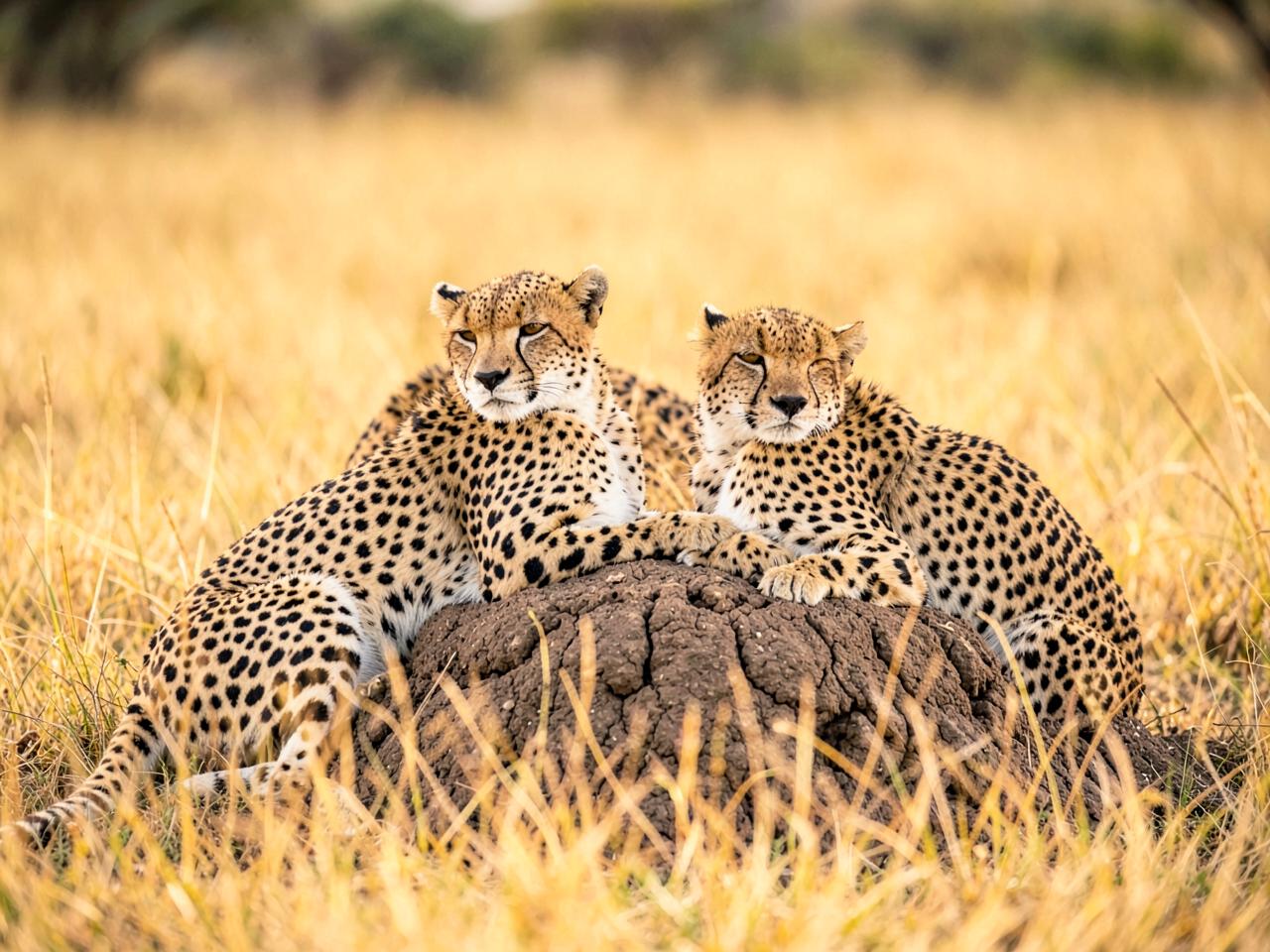
Learning to look wider
Birds, Weather and the Space Between Sightings
Between mammal encounters, Tsavo keeps offering things to notice. A hornbill moving through thorny branches, a roller on an exposed perch or an ostrich crossing open ground changes the scale of the scene. Dry-country birds are not background decoration. Their feeding, flight and choice of shelter reveal how many different ways there are to inhabit a place that can appear austere from a passing vehicle.
Seasonal rainfall reshapes that apparent austerity. Fresh growth can soften the plains, temporary water can disperse animals, and cloud can replace the hard brightness of a dry afternoon. In drier periods, dependable water becomes more important and dust more conspicuous. Neither state is the only authentic Tsavo. The landscape’s character lies partly in this variability, and the distribution of wildlife changes with it rather than following a fixed script.
For photography, that variability is part of the appeal. Lower sunlight can bring texture to an elephant’s dusty hide, while a wider frame places the animal against vegetation and sky. It is worth resisting the urge to fill every image with a face. A small figure beneath a broad cloud bank can communicate the scale of Tsavo more effectively. On dusty drives, protecting equipment and changing lenses sparingly also helps keep attention on the scene rather than the camera.
Attention is part of the experience
A Place to Explore Without Rushing
Tsavo rewards a willingness to let the landscape set the pace. A game drive is not simply transport between animals: it is a way of following changes in soil, vegetation and visibility. An apparently quiet stretch may explain the next encounter, showing where browse thickens or where a drainage line holds greener growth. The more these connections become visible, the less the experience depends on a succession of headline sightings.
The wider region is also lived-in country, not a wilderness detached from people. Roads, railway history, towns and livelihoods form part of southeastern Kenya’s story, while conservation involves the difficult relationship between protected habitats and surrounding land use. Elephant movement can bring real challenges where wildlife and farming meet. Recognising those realities gives the landscape depth without turning neighbouring communities into attractions or assuming that every local person shares the same relationship with wildlife.
Within the parks, responsible exploration means following designated routes and current Kenya Wildlife Service directions, keeping wildlife undisturbed and leaving natural objects where they belong. If a particular walk or site visit interests you, confirm current access and ranger requirements before setting out. The purpose is not to burden the experience with rules, but to preserve the conditions that make it rewarding: space for animals, intact habitats and the possibility of observing behaviour that has not been altered by your approach.

Explore with Friendslife Adventure
Follow the colour into the country
A red-dusted elephant is a wonderful reason to become curious about Tsavo, but the earth itself gives that encounter meaning. River vegetation, thorn scrub, lava and hidden water all belong to the same story. Friendslife Adventure is a fitting starting point for readers who want to follow those connections, with tailor-made experiences that can begin with a conversation about what makes this expansive country so intriguing to you.
You might be most interested in watching elephants, tracing the contrast between Tsavo East and Tsavo West, or giving birds and geology more attention than they usually receive. Discuss those interests alongside the pace that suits you. Tsavo’s spaces invite a different kind of enjoyment from a hurried search for the next sighting: time to notice tracks, changing vegetation and the influence of water. The company’s stated commitment to responsible travel is worth bringing into that conversation too.
Exploring Tsavo with Friendslife Adventure appeals because the journey can start with your fascination and reach beyond it. The elephant’s colour becomes an introduction to a landscape, not the whole reason for visiting. Follow that red earth further, and discover what else catches your eye.
A little more to discover
Curious about visiting?
Why are Tsavo’s elephants red?
Their reddish appearance comes from soil and dust coating their normally grey skin. Elephants throw dust over themselves and bathe in mud as part of skin care. Their colour varies with local soil, recent rain and bathing, so not every elephant looks equally red.
What is the difference between Tsavo East and Tsavo West?
They are separate national parks. Tsavo East is associated with broad dry-country views, the Galana River and the Yatta Plateau. Tsavo West has a more varied, often hillier landscape with volcanic features, the Shetani lava flow and Mzima Springs. Both offer wildlife viewing, but their scenery and visibility differ.
Is Tsavo rewarding for birdwatching and landscape photography?
Yes. Dry-country birds, river habitats, expansive skies and contrasting terrain offer subjects beyond large mammals. Photographers can explore the relationship between wildlife and its surroundings rather than relying only on close portraits. Light, dust, rainfall and vegetation all influence the opportunities.
How does the season affect a Tsavo visit?
Rain can bring greener vegetation and temporary water, allowing animals to spread out. Drier conditions often increase the importance of dependable water sources and make dust more prominent. Wildlife visibility and road conditions vary, so check current local conditions rather than expecting a fixed pattern or guaranteed sightings.
More about the destination
Friendslife Adventure
Let the story become your experience.
Inspired to see it for yourself? Discover our journeys or talk to us about the places you would love to explore.