Reasons to fall in love
What makes this place special.
- Baobab savanna, rocky kopjes and miombo woodland create a varied landscape worth exploring beyond individual animal sightings.
- The Great Ruaha River’s changing water reveals how seasonal conditions shape wildlife movement and behaviour.
- Elephants, predators and varied antelope reward patient observation within a meeting place of different habitats.
- Birdlife, smaller creatures and shifts between wet and dry seasons give Ruaha depth beyond a conventional safari checklist.
Tanzania’s interior
A landscape that asks you to look longer
Ruaha begins with space: a broad sky above pale grass, a rocky rise interrupting the horizon, the heavy silhouette of a baobab standing apart from smaller trees. In this part of Tanzania’s interior, west of Iringa, the landscape does not resolve into one simple picture of African savanna. Open ground gives way to woodland; sandy channels cut through the country; stone and vegetation continually change the view.
That variety is central to the pleasure of being here. A safari can become a sequence of animal names, but Ruaha encourages another way of looking. Why is an elephant lingering beneath a tree? What makes a shaded bank attractive to a resting predator? Why do some antelope keep to thicker cover while others step into open grass? The setting supplies clues, turning a sighting into something more revealing.
For travellers wondering why visit Ruaha, the answer lies partly in this relationship between scale and detail. The skies give the country breadth, while a footprint in sand or movement along a branch draws attention close again. Ruaha wildlife is the immediate attraction, yet the park becomes more absorbing when animals are seen as inhabitants of a changing place rather than subjects isolated from it.

The architecture of the bush
Baobabs, kopjes and the country between
Ruaha baobab landscapes have a distinctive weight and rhythm. Thick trunks and widely spreading limbs give these trees a presence quite different from the finer outlines of surrounding woodland. When leafless, their branches expose an intricate structure against the sky; when in leaf, the same trees seem fuller and softer. Their changing appearance is a reminder that even the most monumental features here belong to a seasonal world.
Baobabs are living parts of the habitat, not simply scenic markers. Their flowers and fruit support ecological relationships, and elephants may strip or gouge their bark. A scarred trunk can therefore tell a story about feeding as well as age. Not every unusual shape has an obvious explanation, but looking at bark, fallen fruit and the ground around a tree adds substance to what might otherwise remain a distant silhouette.
Rocky kopjes provide another kind of structure. These outcrops interrupt the grass and woodland with ledges, crevices and pockets of shelter. Hyraxes may use rocky refuges, while reptiles exploit sun-warmed surfaces and birds survey the surrounding country from elevated perches. Farther on, miombo woodland changes the atmosphere again, enclosing the view and filtering the light. Moving between these settings is part of Ruaha’s appeal: the landscape keeps offering different possibilities.
A changing lifeline
The Great Ruaha River: water, sand and uncertainty
The Great Ruaha River is one of the park’s defining features, but it should not be imagined as a reliably flowing ribbon throughout the year. It can experience low or zero flow, and its appearance changes with seasonal conditions. A channel that holds moving water at one time may later reveal broad stretches of sand, separated pools or exposed banks. Other rivers and drainage lines also help shape the park’s habitats.
These changes affect the distribution of animals. Where surface water persists, it can draw drinking wildlife and support aquatic life, concentrating activity around particular places. Elephants may dig in sandy riverbeds for water beneath the surface. Hippos depend on suitable remaining water, while crocodiles use aquatic refuges and banks. None of this means every pool holds a gathering or every river visit produces a dramatic encounter; conditions matter enormously.
The river is also a useful place to understand the difference between scenery and ecology. A sandy reach can be visually beautiful while signalling real pressure on water-dependent animals. Seasonal rainfall is part of the picture, but catchment conditions and upstream water use also matter. Watching the Great Ruaha with that context gives its beauty greater depth: water here is a changing resource that helps determine how the surrounding country functions.
Behaviour before spectacle
Elephants and the quieter drama of daily life
Elephants are among Ruaha’s compelling animals because their presence connects so many parts of the landscape. They browse trees, move between feeding areas and water, and leave marks that remain after they have passed. Broken branches, disturbed sand and bark damage can make an apparently empty stretch of country legible. Seeing an elephant is exciting; noticing what elephants have been doing gives that excitement a longer life.
A family group can reward attention without any grand event unfolding. A youngster negotiating uneven ground, an adult reaching into foliage, or a brief pause as animals assess their surroundings can reveal how much activity sits inside an ordinary moment. Their movements should not be reduced to human stories, but there is plenty to observe in spacing, pace and interaction. Distance allows behaviour to unfold without turning the vehicle into the centre of the encounter.
Other herbivores bring different habits into view. Giraffes feed above the reach of many browsers; impalas balance feeding with watchfulness; greater kudu can be surprisingly difficult to pick out in woody cover. Even when several species share a scene, they are not using it in the same way. Ruaha’s habitat mosaic makes these differences especially rewarding to notice, replacing the idea of a single savanna community with a more intricate set of relationships.
Patience changes the encounter
Predators in a landscape of possibilities
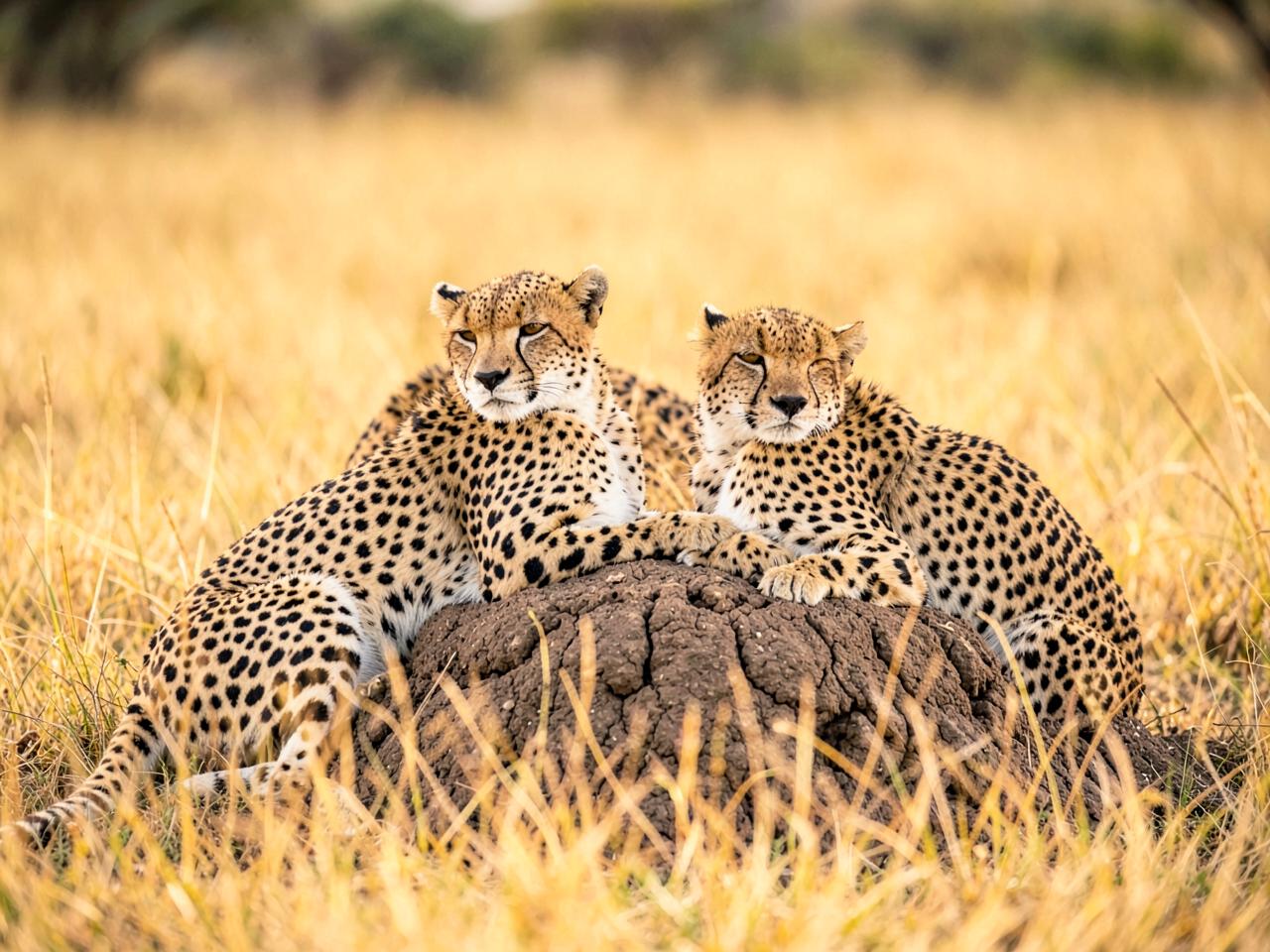
Ruaha supports lions, leopards, cheetahs and African wild dogs, but their presence is not a promise that each will appear. Predator encounters depend on movement, cover, weather and chance. Much of their lives is also less theatrical than safari imagery suggests. Resting in shade, watching from cover or travelling across open ground are meaningful behaviours in their own right, not merely the pauses between hunts.
Different predators make different use of the terrain. Leopards benefit from concealment and can be difficult to detect even nearby. Cheetahs are associated with more open hunting ground, though their movements are not confined to a neat photographic backdrop. Lions may spend long stretches inactive, conserving energy. Wild dogs range widely, making an encounter uncertain but potentially revealing through the coordination of a moving group.
The rewarding approach is to let the animal determine the story. A resting lion need not be prompted into activity, and a distant cat need not be crowded for a closer image. Keeping appropriate space and following park and guide directions protects both the animal and the quality of observation. In Ruaha, the surrounding terrain often explains as much as the predator itself: a patch of shade, a line of cover, or the presence of prey nearby.
Beyond the familiar mammals
Where habitats meet, curiosity grows
Ruaha lies within a broad transition between eastern and southern African ecological influences. Its mixture of woodland, bush and open grassland helps explain a varied wildlife community. Greater and lesser kudu, for example, are among the antelope associated with the park, while other species favour different combinations of grass, cover and water. This is not a landscape in which every animal can be expected around every bend.
Birds make the habitat changes especially noticeable. River margins offer a different set of opportunities from rocky slopes or wooded ground. Kingfishers may draw attention near suitable water, hornbills add movement and sound among trees, and raptors invite a longer look at the sky. Seasonal visitors can alter the mix again. A traveller need not arrive with specialist knowledge to enjoy the simple discovery that a change in vegetation brings a change in voices.
Smaller life adds another layer. Lizards moving between sun and shelter, insects gathering around flowers, or tracks crossing a sandy patch all belong to the same story as elephants and lions. During quiet stretches, these details can rescue the experience from the expectation that something large must always appear. Ruaha rewards curiosity precisely because the country remains interesting between headline sightings; its natural history is distributed across the whole scene.
The atmosphere of a safari
Two seasons, many ways of seeing
Season changes not only what Ruaha looks like but how it can be read. As dry conditions develop, grass often becomes less concealing and animals may concentrate around remaining water. Dust, exposed sand and leafless branches give the landscape a spare clarity. Yet water conditions differ between years and places, so a dry-season visit should not be imagined as a predictable arrangement of wildlife beside a continuously flowing river.
Rain brings a different character: fresh growth, fuller foliage and shifts in animal distribution as water becomes more widely available. Green country can make wildlife harder to detect, but it also offers new textures, bird activity and the visible renewal of plants. Neither seasonal face is the complete Ruaha. Choosing between them is partly a matter of interest, and practical access can change with conditions; current arrangements should be confirmed before travelling.
Within any season, a game drive is an exercise in changing attention. Cooler light can reveal textures that flatten later in the day, while stops allow sounds and small movements to register. Quiet observation often matters more than covering ground quickly. Stay within current park rules and avoid disturbing or feeding wildlife. The result is a richer experience of place, in which the road connects habitats rather than simply linking a succession of sightings.

Explore with Friendslife Adventure
Find the pleasure in looking longer
Ruaha’s big skies make a powerful first impression, but its quieter relationships give you reasons to keep looking: elephants and shade, rocky shelter and predators, river sand and the search for water. Friendslife Adventure is an appealing starting point for an experience shaped around those details. Its tailor-made approach lets your interests in Tanzania’s interior lead the conversation.
You might be drawn to baobabs as much as to wildlife, or want time to observe elephant behaviour rather than move quickly between encounters. Perhaps the changing river is what most intrigues you. Talking about the landscape, animals and pace that matter to you can help place these interests at the centre of your plans. It also encourages a realistic appreciation of seasonal differences, without expecting the country to look exactly like a photograph or produce a particular sighting.
Friendslife Adventure offers a personal way to begin exploring that fascination, with authenticity and responsible travel among its stated values. The reason to consider it here is the opportunity to imagine Ruaha around your own way of noticing, while leaving nature room to surprise you. Look beyond the horizon’s first impression. Discover Ruaha further.
A little more to discover
Curious about visiting?
What makes Ruaha distinctive as a wildlife destination?
Its appeal comes from a varied meeting of habitats: baobab savanna, rocky kopjes, miombo woodland and changing river systems. These settings support different animals and make landscape observation an important part of the safari, alongside sightings of elephants, antelope and predators.
Does the Great Ruaha River flow throughout the year?
Not reliably. The river can experience low or zero flow, and conditions vary seasonally and between years. Some reaches may contain pools or exposed sand rather than continuous flowing water. This variability strongly influences wildlife distribution and the appearance of the river landscape.
How do wet and dry conditions change the experience?
Drier conditions often reduce vegetation cover and draw animals towards remaining water. Rain brings greener scenery, changes in bird activity and more dispersed water sources. Wildlife visibility and practical access vary, so check current conditions rather than assuming any season guarantees particular encounters.
Is Ruaha rewarding for travellers interested in more than large animals?
Yes. Birds, rocky habitats, baobabs, woodland plants and animal tracks add depth between larger sightings. Watching how different species use shade, cover and water can be especially rewarding, even without specialist natural-history knowledge.
More about the destination
Friendslife Adventure
Let the story become your experience.
Inspired to see it for yourself? Discover our journeys or talk to us about the places you would love to explore.