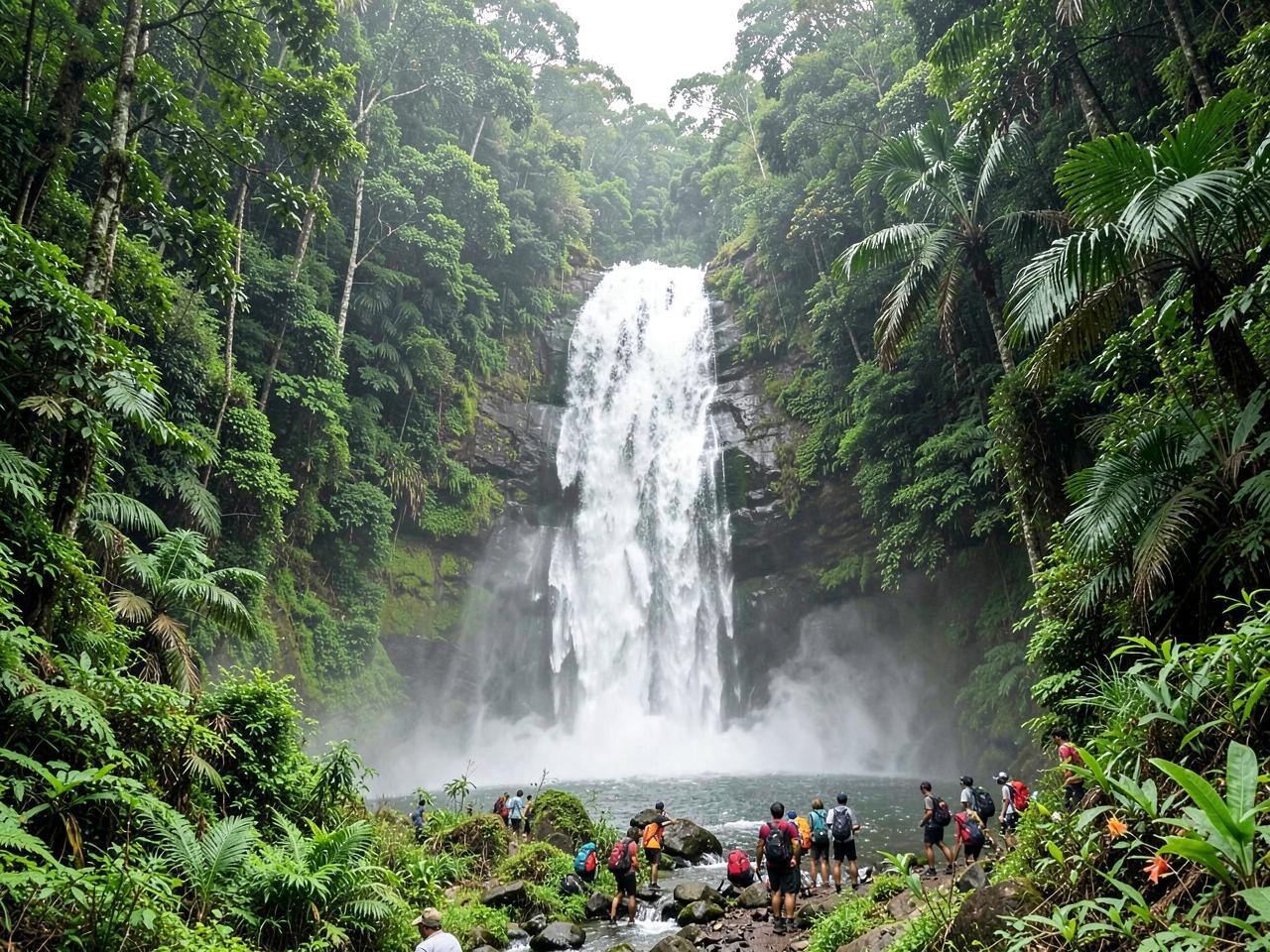
Reasons to fall in love
What makes this place special.
- The Kazinga Channel brings hippos, waterbirds and shoreline wildlife into a different perspective from a savanna game drive.
- Open grassland, volcanic craters, wetlands and forest give the park a varied ecological and visual character.
- Ishasha offers a distinctive southern landscape associated with tree-climbing lions, although sightings are never assured.
- Rich birdlife and the forested Kyambura Gorge reward travellers who look beyond the most familiar safari mammals.
Western Uganda’s living mosaic
Uganda’s Landscapes in One Remarkable Park
Queen Elizabeth National Park begins with variety. Grassland opens towards a broad sky, then gives way to thorny woodland, papyrus fringes or a sudden hollow holding a crater lake. Water is never simply background here: it gathers animals, supports fishing communities and connects habitats that might otherwise seem separate. In western Uganda, within the Albertine Rift, this is a place where a safari can feel expansive one moment and surprisingly intimate the next.
That changing scale is central to its appeal. A buffalo herd may occupy the open plain, while a kingfisher draws attention to a single branch above the water. Elephants move between feeding areas rather than remaining fixed in a postcard landscape. Depending on visibility, the Rwenzori Mountains can appear beyond the park, adding a distant, mountainous dimension to country that is often explored at grassland level.
Queen Elizabeth National Park wildlife makes most sense when seen as part of this mosaic, not as a list of animals to collect. Different habitats create different possibilities, and no single outing represents the whole park. The reward is in noticing the transitions: dry ground becoming marsh, scattered trees thickening into woodland, and the soundscape changing from wind in grass to calls from a crowded shoreline. Uganda’s richness becomes tangible in those small shifts.

Where two lakes meet
The Kazinga Channel: a shoreline full of life
The Kazinga Channel links Lakes Edward and George, forming the park’s most distinctive water connection. Its banks bring together animals with very different needs: hippos spend much of the day in water, buffalo gather along the margins, and elephants may approach to drink or bathe. The channel is not a stage arranged for visitors. It is a working piece of habitat, and its attraction comes from seeing so much ordinary animal life concentrated along one edge.
A boat excursion changes the way that life is observed. Instead of looking across grass from a vehicle, travellers watch the bank from water level. Hippo ears and nostrils break the surface; a crocodile can be difficult to distinguish from a length of shoreline until its shape resolves. A buffalo standing in the shallows becomes a study in texture, with wet hide, mud and the patient flick of an ear. Encounters depend on conditions and animal movement, but the perspective itself is distinctive.
Kazinga Channel wildlife also invites attention beyond large mammals. Pelicans, cormorants, kingfishers and other waterbirds use different parts of the shoreline, feeding, resting or moving between perches. Watching quietly reveals these separate routines. Boat viewing should leave animals room rather than press for a reaction, especially around hippos and busy banks. A rewarding encounter is one in which the animals continue what they were already doing.
Grassland, grazers and the possibility of predators
Reading the northern savanna
Around Kasenyi, the northern savanna gives the park one of its classic wildlife settings. Open grassland supports Uganda kob, whose reddish coats stand out against green growth or paler, drier grass. These antelope are more than attractive foreground subjects. Their feeding, grouping and breeding behaviour help explain how the plain works, while their presence also matters to predators moving through the same landscape.
A game drive here rewards both a broad gaze and close attention. Buffalo can appear as dark masses at a distance; warthogs are easier to overlook until movement reveals them. Elephants may be partly concealed by vegetation despite their size. Lions are present, but finding them requires favourable circumstances, and a satisfying drive need not depend on a predator encounter. A kob lifting its head, a herd changing direction or birds gathering around disturbed ground can make the scene feel alert and connected.
The Mweya Peninsula offers a different emphasis within the northern part of the park, with woodland and its relationship to the channel and surrounding water. Kasenyi and Mweya should not be treated as interchangeable scenery: one suggests the openness of grazing country, the other the importance of wooded edges and water. Together they show why exploring this park is less about repeatedly searching the same habitat and more about understanding what each landscape supports.

A landscape shaped by geological change
Crater country and the deeper story beneath it
The crater landscapes introduce another scale of time. In parts of the park, rounded depressions and steep-sided basins interrupt the more familiar savanna. These features belong to the volcanic history of the western Rift, where geological forces shaped the ground long before the present pattern of grass, woodland and water developed. Looking across a crater is a reminder that wildlife landscapes have foundations: relief, drainage and soil help determine what can grow and where animals can live.
Not every basin holds the same kind of water or vegetation. Some crater lakes have markedly different chemistry from the larger freshwater systems, while other hollows emphasise grass and wooded slopes. Their appeal lies in this variation rather than in one uniform spectacle. A broad view can hold a circular basin, a distant lake and rolling country together, bringing the park’s geological and ecological stories into a single scene.
At Katwe, near Lake Edward, the salt lake adds a human dimension to that history. Salt extraction has long been part of local livelihoods, linking people to the lake’s unusual conditions through skilled and demanding work. Where visits are available, the subject deserves more than a picturesque glance. Listening to local explanations gives meaning to the landscape, while asking before photographing people respects the fact that this is a place of work, not an exhibit.
The park’s distinctive southern sector
Ishasha, where the lion story changes
In Ishasha, the southern sector, broad savanna and large trees create a different atmosphere from the channel and the northern plains. The landscape invites the eye to travel horizontally across grass, then upwards into branching crowns. That upward glance has become part of the area’s identity: Ishasha is associated with lions that sometimes rest in trees, turning a familiar safari animal into an unexpectedly elevated presence.
A lion stretched along a substantial branch is memorable partly because of the contrast. An animal usually imagined moving through grass appears supported by wood, its body fitted to the curve of a limb. Fig trees are particularly associated with these sightings. Explanations for the behaviour include escaping ground-level heat and biting insects, but it is wiser not to reduce a flexible animal habit to one certain cause. Lions elsewhere also climb trees; Ishasha’s association is distinctive without being exclusive.
Ishasha tree climbing lions remain a possibility, not a promise. Animals may be on the ground, concealed or elsewhere entirely. The sector still deserves attention when branches are empty: buffalo and other grazers use the grasslands, elephants move through the wider habitat, and trees provide structure for birds and shade-seeking animals. Patient observation preserves that broader interest. Staying on permitted routes and giving wildlife space matters more than manoeuvring for a photograph that forces the encounter.
Beyond the mammal checklist
Birdlife makes every habitat worth watching
Birds are one of the clearest expressions of the park’s variety. A traveller need not arrive with a specialist field list to notice the change between waterbirds on the channel, raptors above open country and smaller species moving through woodland. Each habitat brings a different combination of shapes, calls and feeding behaviour. For experienced birdwatchers, those transitions are a reason to linger; for newcomers, they make the landscape easier to read.
Along water, a kingfisher’s plunge tells a different story from a pelican’s feeding movements or a heron’s stillness at the margin. On the savanna, birds may follow large mammals or gather where food has been exposed. Vultures and other scavengers, when encountered, reveal another essential part of the ecosystem rather than merely signalling a dramatic predator scene. Watching how birds use space can be as absorbing as learning their names.
The practical pleasure is that birdwatching fills the apparent pauses in a safari. When larger animals are distant or resting out of sight, activity may continue on a nearby branch or above the grass. Binoculars help, but patience helps just as much. Allowing time for an unfamiliar call, a small movement in leaves or the flight of a raptor turns waiting into observation, giving the park a richness that does not depend on a succession of headline sightings.
A change in light, sound and scale
Kyambura Gorge and the forest below the plain
Kyambura Gorge adds a striking counterpoint to the open country. From above, the surrounding landscape can suggest savanna continuity; within the gorge, forest gathers along the river. The contrast is not simply scenic. Shade, moisture and dense vegetation create conditions unlike those on the grassland above, supporting a different community of animals and plants within the same wider park.
Chimpanzees are associated with this forest, and guided tracking can offer a way to explore their habitat, subject to current Uganda Wildlife Authority arrangements. A sighting is not assured. The forest itself remains part of the experience: trunks rise through layered vegetation, calls carry without their source immediately becoming visible, and attention shifts from distant horizons to the space between leaves. Confirm current ranger, permit and access requirements before planning this activity.
Forest primates also ask something different of the observer. They move through a three-dimensional habitat, and their behaviour cannot always be followed from one clear viewpoint. Listening and allowing a guide to interpret movement can be more useful than continually searching for a photograph. The gorge reinforces the park’s central attraction: a journey here can include savanna mammals, waterlife and forest encounters without pretending they are the same experience. Each asks for its own pace and way of looking.
Explore with Friendslife Adventure
Follow the connections across western Uganda
Queen Elizabeth National Park offers the pleasure of changing perspective without losing the thread: water along the Kazinga Channel, open grazing country, volcanic basins and forest below the plain. Friendslife Adventure is a compelling choice for readers drawn to that variety, because its tailor-made approach gives you a way to discuss which connections you most want to explore.
Start with what caught your imagination in the story. It might be birdlife along the shore, the shape of crater country or the possibility of observing lions around Ishasha’s fig trees. Then talk about the pace you enjoy and how much attention you would like to give each kind of landscape. A personal conversation can keep the park’s variety from becoming a race through different scenes, allowing your interests to guide the experience without expecting wildlife to appear on demand.
The appeal of Friendslife Adventure is that this exploration can begin with you, supported by its stated emphasis on friendship, authenticity and responsible travel. Queen Elizabeth rewards an outlook broad enough to appreciate both a much-anticipated animal and the habitat around it. Let water, grassland and forest expand your curiosity. Explore further.

A little more to discover
Curious about visiting?
What makes Queen Elizabeth National Park worth visiting?
Its appeal is the meeting of distinct habitats: savanna, the Kazinga Channel, wetlands, volcanic crater landscapes and the forest of Kyambura Gorge. These support varied wildlife experiences and make landscape observation as rewarding as searching for particular animals.
What wildlife might visitors see on the Kazinga Channel?
Hippos are a characteristic presence, while buffalo, elephants and crocodiles may be seen along the water and banks. Waterbirds add considerable interest. Sightings vary, but a boat excursion offers a distinctive water-level perspective on shoreline life.
Are tree-climbing lions guaranteed in Ishasha?
No. Ishasha is associated with lions resting in trees, but they may be on the ground, hidden or absent from the area being explored. The southern sector’s savanna, trees and other wildlife remain worthwhile even without a lion sighting.
Can visitors experience forest as well as savanna in the park?
Yes. Kyambura Gorge contains riverine forest that contrasts strongly with the surrounding open landscape. Guided chimpanzee tracking may be available, without guaranteed sightings. Confirm current Uganda Wildlife Authority ranger, permit and access requirements before planning a visit.
More about the destination
Friendslife Adventure
Let the story become your experience.
Inspired to see it for yourself? Discover our journeys or talk to us about the places you would love to explore.