
Reasons to fall in love
What makes this place special.
- Open grasslands make it possible to observe animals in relation to their surroundings, not only as isolated sightings.
- Resident predators, grazers and river wildlife give the Mara interest beyond the migration season.
- The Mara belongs to the wider Serengeti-Mara ecosystem, where rain, grass and animal movement connect Kenya and Tanzania.
- River corridors, changing light and respectful encounters with Maasai communities add depth to the experience.
The open stage
A landscape that lets you see the relationships
The first compelling thing about the Maasai Mara is space. Grassland rolls towards low ridges, trees punctuate the horizon, and clouds cast travelling shadows across the ground. An animal need not be close to command attention: a giraffe moving along a skyline or an elephant standing beneath a broad sky can give the whole scene a sense of scale. This openness is central to the appeal of Maasai Mara wildlife. It allows the eye to follow not just individual creatures, but the distances and relationships between them.
What looks from afar like a simple sweep of grass is a varied landscape. Shorter grazing lawns give way to taller vegetation, wooded drainage lines and river corridors. A slight rise may reveal a herd previously hidden in a fold of land. Those changes matter to animals: grazers seek suitable forage, predators use cover, and birds move between feeding and resting places. Looking carefully turns an apparently empty stretch of country into a landscape full of possibilities.
The Mara is in southwestern Kenya, within the larger Serengeti-Mara ecosystem. Its national reserve is managed by Narok County; neighbouring conservancies have their own arrangements. These distinctions matter, but the immediate experience is less administrative than atmospheric. Here, the pleasure of watching wildlife includes watching the country itself, noticing how animals occupy it and how a seemingly quiet scene can change without warning.

Predators in context
Big cats, and the value of waiting
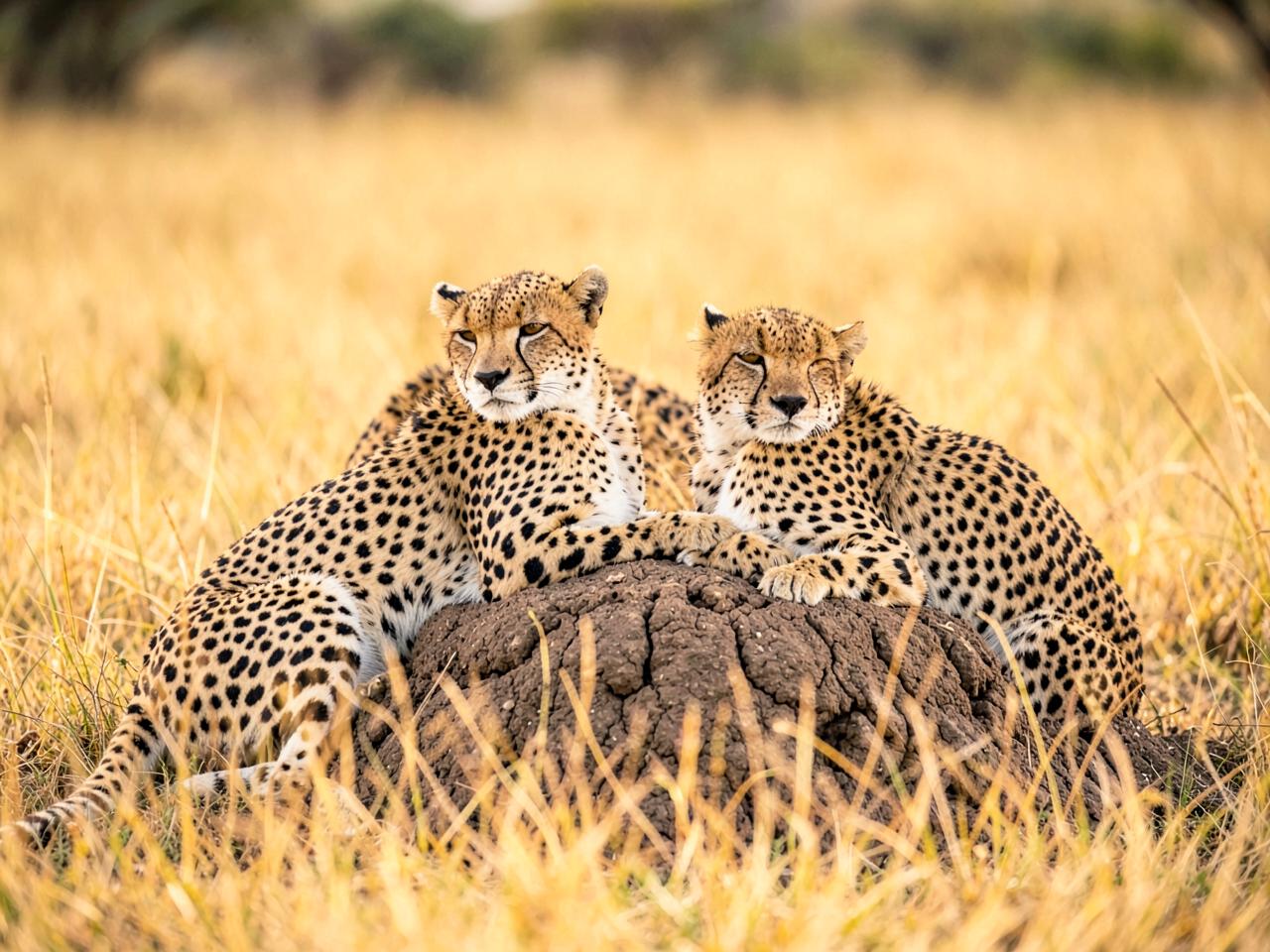
Lions, cheetahs and leopards are among the animals that draw travellers to the Mara, but each asks for a different kind of attention. Lions may spend long periods resting, their apparent indifference interrupted by a lifted head or an exchange within the pride. Cheetahs often scan open country, where sight and acceleration are essential to their hunting. Leopards are harder to detect, their spotted coats dissolving into broken shade and woody cover.
The reward is not necessarily a chase. A lioness checking the movements of nearby grazers, a cheetah pausing on a rise, or a cub testing the patience of an adult can reveal more than a hurried sequence of photographs. Predators live within a demanding economy of energy, opportunity and risk. Resting is part of that story, not an absence of it. So are failed attempts, cautious approaches and the need to avoid larger competitors.
Watching big cats in Maasai Mara is most absorbing when the surrounding scene remains in view. Which way is the wind moving? Have the antelope noticed something? Why has a cat chosen that patch of cover? These questions encourage patience without promising an outcome. Give animals space and avoid pressing for a closer position: a relaxed animal behaving naturally is a more meaningful encounter than one responding to a vehicle.
Beyond the headline sightings
The resident cast deserves its own attention
Even when the great migratory herds are elsewhere, the Mara has a rich resident animal community. Zebra, several antelope species, buffalo, giraffes and elephants give a drive its changing rhythm. Their differences are worth lingering over. A giraffe reaches into foliage unavailable to most grazers; a warthog feeds close to the ground; buffalo gather with a solidity quite unlike the quick alertness of smaller antelope. There is no single way to make a living on the savanna.
Elephants bring another dimension to the grassland. Their feeding, movement and use of woody vegetation help shape habitats, while family interactions offer a reason to watch slowly. A youngster following an adult, a brief touch between trunks, or a group choosing its direction can be quietly absorbing. Giraffes, meanwhile, turn feeding into an exercise in reach and selection, taking leaves from heights that make the trees themselves part of the encounter.
Spotted hyenas also deserve more than a supporting role in a lion story. They are capable hunters as well as scavengers, with complex social lives. Vultures, too, belong to the essential work of the ecosystem, locating carrion and helping return its nutrients to circulation. Seeing these animals together broadens the meaning of a safari: the landscape is sustained by many forms of feeding, competition and cooperation, not just by its most photographed inhabitants.
The wider ecosystem
Migration: One Chapter in the Mara’s Story
The migration gives the Mara some of its most dramatic associations: wildebeest massing on open ground, zebra threaded among them, and riverbanks alive with movement. Yet the larger story begins with grass and rain. Herds move through the Serengeti-Mara ecosystem in response to changing forage and water, crossing a political boundary that has no meaning to their ecological needs. The Mara is one part of this extensive, connected landscape rather than the setting for an isolated annual event.
The arrival and distribution of migratory animals vary with conditions. Broad seasonal patterns help explain their movement, but they cannot provide an appointment with a particular herd or river crossing. Animals may gather beside water, hesitate, spread out or move away. A crossing can be sudden; it can also fail to happen while visitors wait. Understanding that uncertainty makes the spectacle more intelligible and prevents a famous image from becoming the only measure of a worthwhile visit.
When large herds are present, their impact extends beyond numbers. Grazing changes the vegetation, predators respond to available prey, and scavengers follow opportunities. Even without a crossing, the sight of animals spread across successive folds of grassland can be remarkable. Equally, the resident Mara continues when those herds move on. Its rivers, territorial predators, browsing animals and birdlife ensure that migration remains an extraordinary chapter within a much longer natural history.
A different tempo
Where the grasslands meet the rivers
The Mara and Talek rivers introduce another texture to the landscape. Along their corridors, trees and denser vegetation interrupt the open views, and attention shifts from distant silhouettes to banks, branches and water. These habitats offer resources and shelter distinct from the plains. They also make the reserve feel less uniform than its familiar grassland photographs suggest: an encounter beside a shaded river can have a very different atmosphere from one on an exposed ridge.
Hippos spend much of the day in water, where their eyes, ears and nostrils may be the most visible clues to their presence. A still surface can suddenly acquire sound and movement. Nile crocodiles add a quieter tension, sometimes appearing almost inseparable from the bank. Neither animal needs the drama of migration to be interesting. Their lives belong to the rivers throughout the year, although where they are visible depends on local conditions.
Riverine trees and nearby vegetation also reward birdwatching. Kingfishers, herons and other water-associated birds bring small, precise activity to scenes dominated elsewhere by large mammals. Watch the edges as well as the centre of the view: a movement on a branch or a bird working the shallows can open a different story. Maintaining a respectful distance from animals and riverbanks protects both the encounter and the fragile habitat around it.
The safari experience
Light, weather and the art of looking
A Maasai Mara safari experience is shaped as much by changing conditions as by a list of species. Early light can bring definition to every blade of grass; later, heat softens distant outlines. Cloud cover changes colour and contrast across the plains. After rain, the smell of damp earth and the renewed brightness of vegetation give the landscape another character. These shifts are not merely a backdrop for wildlife photographs. They influence visibility, atmosphere and animal activity.
Birds make the sky and ground worth watching between mammal encounters. Raptors survey the country, while smaller species move through grass and shrubs. A secretary bird walking across open ground has a presence entirely its own, its long-legged search for prey turning a stretch of savanna into feeding territory. For travellers new to birdwatching, the Mara offers an accessible beginning: look for behaviour first, then allow names and distinctions to follow.
From a safari vehicle, a thoughtful pace matters. Stopping to scan a slope often reveals more than continually searching for the next celebrated animal. Binoculars help bring distant behaviour into focus without demanding proximity. Photography can sharpen observation, but lowering the camera occasionally restores the wider scene: weather moving across the horizon, calls carrying through the air, and several species sharing one view. The most lasting impression may be a whole landscape rather than a single close-up.

Community and conservation
A living landscape, with people in its story
The Mara is not an empty wilderness detached from human life. Maasai communities are part of the region’s history and present, with livelihoods, land relationships and aspirations that extend well beyond tourism. Pastoralism has helped shape this wider landscape, while contemporary life includes many occupations and perspectives. Approaching the region with that understanding avoids reducing people to costume, performance or a single unchanging account of culture.
Where a community welcomes visitors, conversation can add a valuable human dimension to the journey. The most respectful encounters allow hosts to explain what they wish to share and how they live today. Ask before taking photographs, accept boundaries, and approach exchanges with curiosity rather than assumptions. A cultural visit is rewarding when people remain participants in the encounter, not scenery added to a wildlife experience.
Conservation here also extends beyond the reserve boundary. Neighbouring conservancies connect wildlife tourism, habitat protection and landowner participation, though arrangements differ between places. The wider ecosystem faces pressures involving land use, grazing, development and the need to sustain animal movement. Knowing this adds depth to the view. The open country that travellers admire depends on continuing choices by communities, managers and visitors, including the simple decision to observe wildlife without crowding or disturbing it.
Exploring with Friendslife Adventure
Make room for the Mara’s unfolding story
A herd moving beneath a gathering storm can be as memorable as the animal you most hoped to see. That is what makes the Mara worth approaching with an open mind, and why Friendslife Adventure offers a compelling starting point for a journey here. Its tailor-made approach invites you to talk about the experience you want, rather than squeezing your curiosity into a fixed idea of what a safari should be.
If big cats fascinate you, say what interests you about their behaviour. If birds, riverine woodland or the relationships between grazing animals and grassland draw your attention, bring those into the conversation too. Discussing landscape, wildlife and pace allows the Mara to become more than a sequence of anticipated highlights. It also leaves room to consider the people whose lives belong to this wider landscape, in keeping with the company’s stated interest in authentic, responsible travel.
Friendslife Adventure is worth exploring for a Mara experience shaped around the way you like to look and learn. Bring your excitement about the famous wildlife, but keep space for weather, light and resident herds to tell their own stories. Discover the possibilities further.
A little more to discover
Curious about visiting?
Is the Maasai Mara worth visiting outside the migration season?
Yes. Resident lions, cheetahs, elephants, giraffes, buffalo and many other animals give the Mara interest beyond the migration. River habitats, birdlife and changing grassland conditions also reward attention. Sightings always depend on animal movement and conditions.
Are wildebeest river crossings guaranteed?
No. Migration movements respond to rainfall, forage and water conditions. Even when herds reach a river, they may wait or move elsewhere. Crossings are one possible experience, not a dependable event.
What makes wildlife watching in the Mara distinctive?
Its extensive open grasslands often allow visitors to watch animals within a broad landscape. Seeing predators, grazers and scavengers in relation to one another can reveal behaviour and ecological connections that a close-up alone misses.
How should visitors approach Maasai cultural encounters?
Choose encounters welcomed by the community, listen to hosts and ask permission before photography. Recognise Maasai people as members of contemporary, diverse communities rather than expecting every person to represent a fixed version of tradition.
More about the destination
Friendslife Adventure
Let the story become your experience.
Inspired to see it for yourself? Discover our journeys or talk to us about the places you would love to explore.