
Reasons to fall in love
What makes this place special.
- Observe elephant families in an open landscape where movement, relationships and feeding behaviour can become part of the experience.
- Discover how groundwater associated with Kilimanjaro sustains wetlands amid otherwise dry plains.
- Experience the changing relationship between Kenya's Amboseli landscape and Kilimanjaro across the border in Tanzania.
- Explore a varied wildlife setting where marsh birds, grazing mammals and predators add depth beyond the famous elephant scenes.
First impressions
A landscape larger than its famous photograph
An elephant beneath Kilimanjaro is one of East Africa's defining images, but Amboseli is more interesting than a single composition. Its appeal lies in the relationship between things: the scale of an animal against an open plain, the sudden green of a marsh beyond dusty ground, and a mountain that seems close while belonging to another country. Amboseli is in Kenya; Kilimanjaro rises across the border in Tanzania.
The openness gives the landscape a particular rhythm. Animals may be visible at a distance, yet their stories emerge slowly as they approach water, pause to feed or change direction. Dust, low vegetation and broad sky create a sense of exposure, while pockets of woodland and wetland introduce shelter and texture. Even without a clear summit view, there is much to read in the country at ground level.
This is why visiting Amboseli can be rewarding beyond the pursuit of a familiar photograph. It offers a chance to understand how a dry-looking environment supports abundant life, and how wildlife responds to resources distributed unevenly across it. A journey here becomes richer when the mountain is treated as one element of the scene rather than its sole purpose.

The social world
The Lives of Amboseli’s Elephant Families
Amboseli elephants draw attention partly because the open terrain can make their behaviour easier to follow. A family moving across a plain is not a collection of interchangeable animals. Adult females and their young form lasting social relationships, with experienced females playing important roles in movement and responses to their surroundings. Males generally become more independent as they mature, though their lives still involve complex social connections.
Look beyond tusks and size. A calf may remain close to its mother, adjust its pace to an older animal or experiment with a trunk it has not yet fully learned to control. Adults communicate through touch, scent, sound and posture; some of their low-frequency calls travel beyond human hearing. What looks like a quiet pause may contain exchanges a visitor can only partly perceive.
Amboseli's elephants have also been the subject of long-running scientific study, helping reveal the importance of family relationships, individual histories and accumulated knowledge. That perspective changes the encounter. Rather than waiting only for a dramatic pose, it becomes absorbing to watch who follows whom, how a group keeps together and when feeding gives way to travel. Give elephants space and avoid encouraging a closer approach: their ordinary, undisturbed behaviour is the real attraction.
Weather, light and scale
Kilimanjaro and the art of waiting
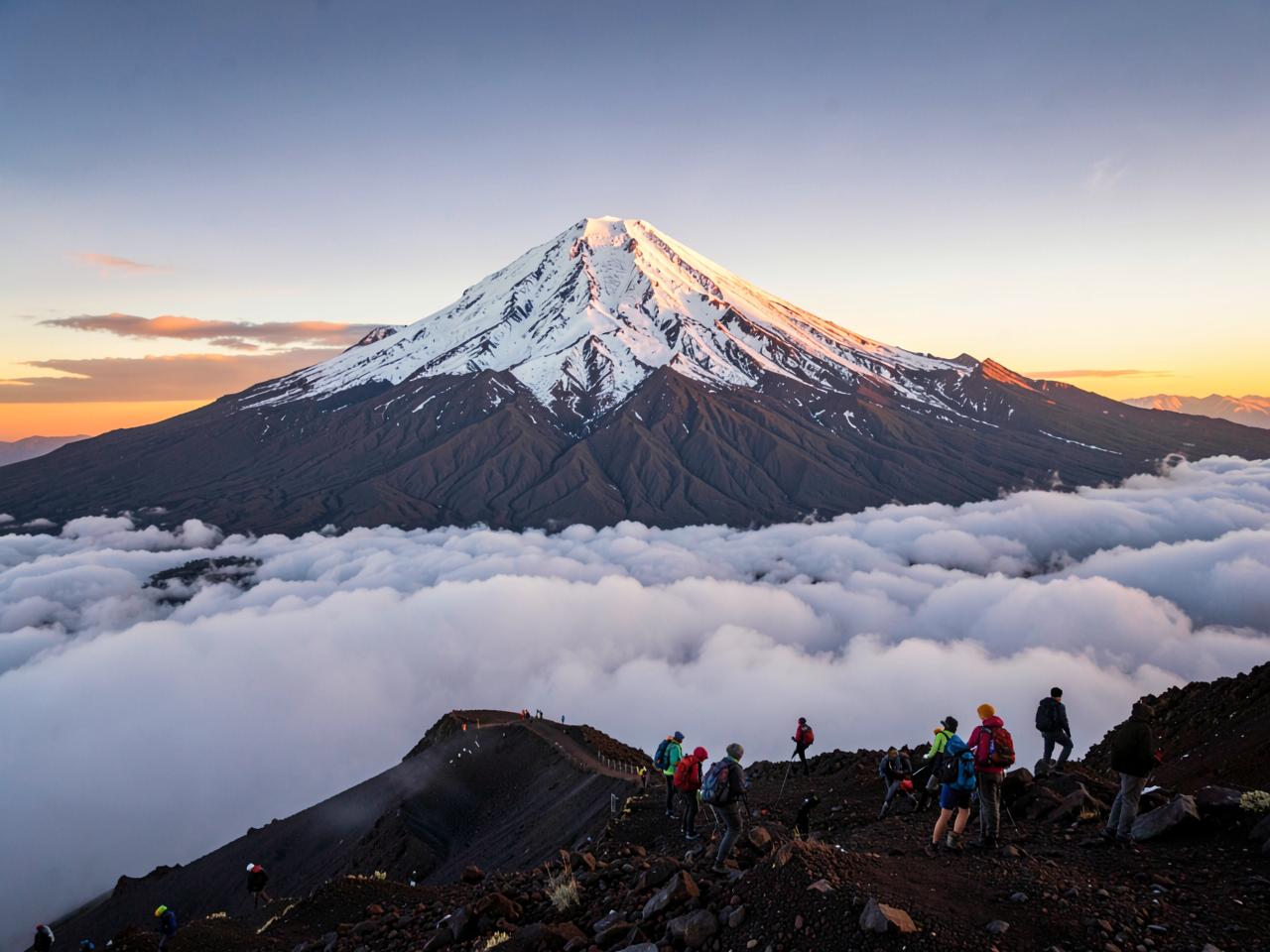
Kilimanjaro gives Amboseli a dramatic southern horizon when conditions allow. Its upper slopes and summit can appear above the plains with an almost improbable separation of scale: animals occupy the foreground while the mountain rises far beyond them. Yet the summit may be hidden behind cloud, partly revealed through a gap or lost in haze. A clear view is a possibility, never an entitlement.
Early and late daylight can soften the plains and reveal contours that flatter midday light tends to flatten. Mornings sometimes offer clearer mountain views, but weather does not follow a visitor's expectations. Clouds may build, drift or break unexpectedly. The changing conditions are part of the experience, turning the same stretch of country into several different landscapes without requiring the observer to move very far.
For photography, the rewarding approach is to respond to what is present. An elephant's shape against bright grass, a reflection near water or layers of cloud above a dusty horizon can carry the character of Amboseli even when Kilimanjaro remains concealed. When the mountain does emerge, its impact comes partly from that uncertainty. It is a geographical presence, not a permanent stage set, and the park retains its substance without it.
Beyond the elephants
Where the marsh brings another cast of characters
Elephants may dominate anticipation, but Amboseli's wetlands invite a different kind of attention. Herons and egrets work the margins, waterbirds use open pools, and African jacanas can move across floating vegetation on remarkably long toes. Bird activity gives the marsh a finer scale: a patient stance, a quick strike into water or a sudden flight can be as revealing as the movement of a large mammal.
Elsewhere, zebra and wildebeest bring pattern and motion to the grasslands. Buffalo use suitable feeding and watering areas, while giraffes are associated with browse where woody vegetation provides it. Hippos may be encountered in wetland habitat. Each species occupies the landscape differently, so the experience is not simply a matter of adding names to a list. Watching where an animal feeds often explains something about the place itself.
Lions, cheetahs and spotted hyenas are also part of Amboseli's wildlife community, although a visit should not be built around promises of predator encounters. Their presence adds another layer to the relationships between open ground, cover and prey. Some outings will be remembered for a conspicuous mammal; others for a marsh alive with birds. Allowing both kinds of encounter to matter makes the park feel fuller and reduces the temptation to rush past its quieter life.
Learning to notice
An Amboseli wildlife experience at a slower pace
A vehicle-based wildlife outing offers more than transport between sightings. In an open landscape, stopping can reveal details that movement conceals: elephants choosing a route toward a marsh, birds settling after a disturbance, or grazers gradually spreading across a feeding area. The most absorbing moments often involve watching a scene develop rather than arriving at its climax. Distance can be useful, allowing several animals and their surroundings to remain in view together.
Seasonal conditions change the experience. Drier periods can sharpen contrasts between wetlands and surrounding plains, while rain can bring fresh growth, different skies and altered ground conditions. Neither version is the only authentic Amboseli. Heat, dust, cloud and vegetation all influence what is visible and how animals use the area. The pleasure lies in noticing those connections rather than expecting the landscape to reproduce a brochure image.
Responsible viewing supports that patience. Keep noise low, avoid pressuring animals to move and follow current park directions and your guide's instructions about vehicle movement and permitted access. If considering any activity outside ordinary vehicle viewing, confirm the current access and ranger requirements beforehand. The aim is not to manufacture intimacy, but to observe wild animals with enough space for them to continue making their own decisions.

People and coexistence
A living landscape beyond the park boundary
Amboseli belongs to a wider landscape with a long history of Maasai pastoralism. Beyond the national park, settlements, livestock, wildlife habitat and movement routes share space. The apparent emptiness of a distant plain should not be mistaken for an absence of human relationships with the land. Water and grazing are important to livelihoods as well as wildlife, and changing conditions affect both.
Animals do not organise their lives around the boundary of a protected area. Their movements connect the park to surrounding lands, making habitat continuity and coexistence important to Amboseli's future. The challenges are practical as well as ecological: access to resources, competing land uses and the consequences of living near large wild animals. Recognising this wider setting gives the famous elephant scene a more truthful context.
Where a visit includes meeting local people, approach it as an exchange with contemporary individuals and communities, not an encounter with a culture frozen in time. Ask before photographing people and respect the terms on which a community welcomes visitors. The central wildlife experience does not require a cultural performance, but an understanding of the region's human presence deepens appreciation of the landscape. Amboseli is both a protected place and part of a lived-in world.
Explore with Friendslife Adventure
Look beyond the famous silhouette
Amboseli’s familiar image is only the beginning: elephants beneath a mountain, with a much richer world unfolding around them. Friendslife Adventure is an inviting choice for travellers who want that richer experience, because its tailor-made approach begins with personal interests rather than a single picture to reproduce. Here, those interests might lead towards elephant family behaviour, the life around the marshes or the surprising relationship between water and dry country.
A conversation about Amboseli can make space for what you would most enjoy observing and how you prefer to spend time in the landscape. Perhaps you are drawn to the movements of a family across the plain; perhaps wetland birds hold your attention just as readily. Talking about wildlife, scenery and pace helps put those preferences at the heart of your plans, while recognising that Kilimanjaro’s appearance remains a matter of weather, not expectation.
The appeal of Friendslife Adventure here is the opportunity to pursue a more personal understanding of Amboseli, with the company’s stated values of authenticity and responsible travel as part of the discussion. Let the mountain frame your curiosity without defining it. Explore Amboseli’s quieter depths further.
A little more to discover
Curious about visiting?
Is Kilimanjaro in Amboseli National Park?
No. Amboseli National Park is in Kenya, while Kilimanjaro is across the border in Tanzania. The mountain provides a striking backdrop when atmospheric conditions allow, but cloud and haze can hide it.
Why are wetlands so important to Amboseli's wildlife?
Spring-fed wetlands supply water and productive feeding habitat within a seasonally dry environment. Groundwater associated with rainfall on Kilimanjaro helps sustain them, supporting elephants, other mammals and numerous waterbirds.
What makes watching Amboseli elephants distinctive?
The open landscape can offer opportunities to follow family groups and observe feeding, travel and interactions between adults and calves. Sightings vary, but watching behaviour patiently often reveals more than seeking a close photograph.
Is Amboseli worth visiting if the mountain is hidden?
Yes. Elephant behaviour, wetland birdlife, grazing mammals and the contrast between marshes and dry plains give Amboseli substantial interest independently of Kilimanjaro. Treat a clear mountain view as a welcome addition rather than the measure of a successful visit.
More about the destination
Friendslife Adventure
Let the story become your experience.
Inspired to see it for yourself? Discover our journeys or talk to us about the places you would love to explore.