Reasons to fall in love
What makes this place special.
- Listen for chimpanzee calls and discover how sound reveals activity beyond the forest’s visible edges.
- Observe the changing relationships of a wild chimpanzee community rather than seeking only a close portrait.
- Explore a forest whose other primates, birds and small organisms reward sustained attention.
- Connect Kibale’s canopy with the wetlands, cultivated hills and living communities of western Uganda.
Arriving in Kibale
A forest that reaches you through sound
A tropical forest rarely reveals itself all at once. In Kibale, a path may offer only a narrow corridor between trunks, while the canopy holds most of the movement overhead. Leaves rub together; an insect’s repeated note seems to come from everywhere; something heavier disturbs a branch beyond sight. Then a chimpanzee call can change the meaning of the whole soundscape. What appeared to be stillness becomes occupied space, alive with animals moving through a world you can hear more easily than you can see.
Kibale National Park lies in western Uganda, near Fort Portal, where forest meets a countryside of cultivated slopes, wetlands and scattered settlements. It is especially associated with chimpanzee tracking, but its appeal begins before any animal appears. The enclosed paths, humid air and changing light ask for a different kind of attention from an open savanna. Here, wildlife watching involves interpreting fragments: a dark shape crossing a gap, fruit dropping through leaves, a sudden chorus travelling across the trees.
That is the promise of a Kibale chimpanzee experience: not simply reaching an animal, but learning to notice the forest that makes its life possible. The setting can be physically demanding and visually elusive, yet those qualities help give an encounter its depth. You are entering a habitat with its own rhythms, not a stage arranged around a visitor’s arrival.
Chimpanzee society
The conversations above the path
Chimpanzee voices carry information as well as atmosphere. Their rising, emphatic pant-hoots can announce an individual’s presence and help maintain contact across the forest. Other sounds belong to closer exchanges: calls around food, reactions to a disturbance, or the noisy energy of a gathering. A visitor need not identify every vocalisation to appreciate the effect. Listening makes it possible to sense a social world extending well beyond the animals currently in view.
Chimpanzees live in communities, but they do not necessarily travel together as one permanent group. Individuals form smaller parties that split and reunite as circumstances change, a pattern known as fission-fusion society. Food availability, relationships and reproductive activity can influence those gatherings. Consequently, one encounter may involve a few animals feeding quietly, while another reveals more movement and interaction. The forest does not deliver the same scene on each visit, and a crowded gathering is not the only rewarding one.
Small gestures can be as absorbing as loud displays. Grooming may strengthen a relationship; a juvenile may test its balance along a branch; an adult may pause before moving towards another individual. These are opportunities to observe, not invitations to assign human motives with certainty. Chimpanzees are our close evolutionary relatives, but their lives are their own. Allowing that distinction to remain makes the encounter more interesting, replacing a search for familiar expressions with curiosity about real behaviour.
Understanding the animal
Kibale’s Own Forest Story
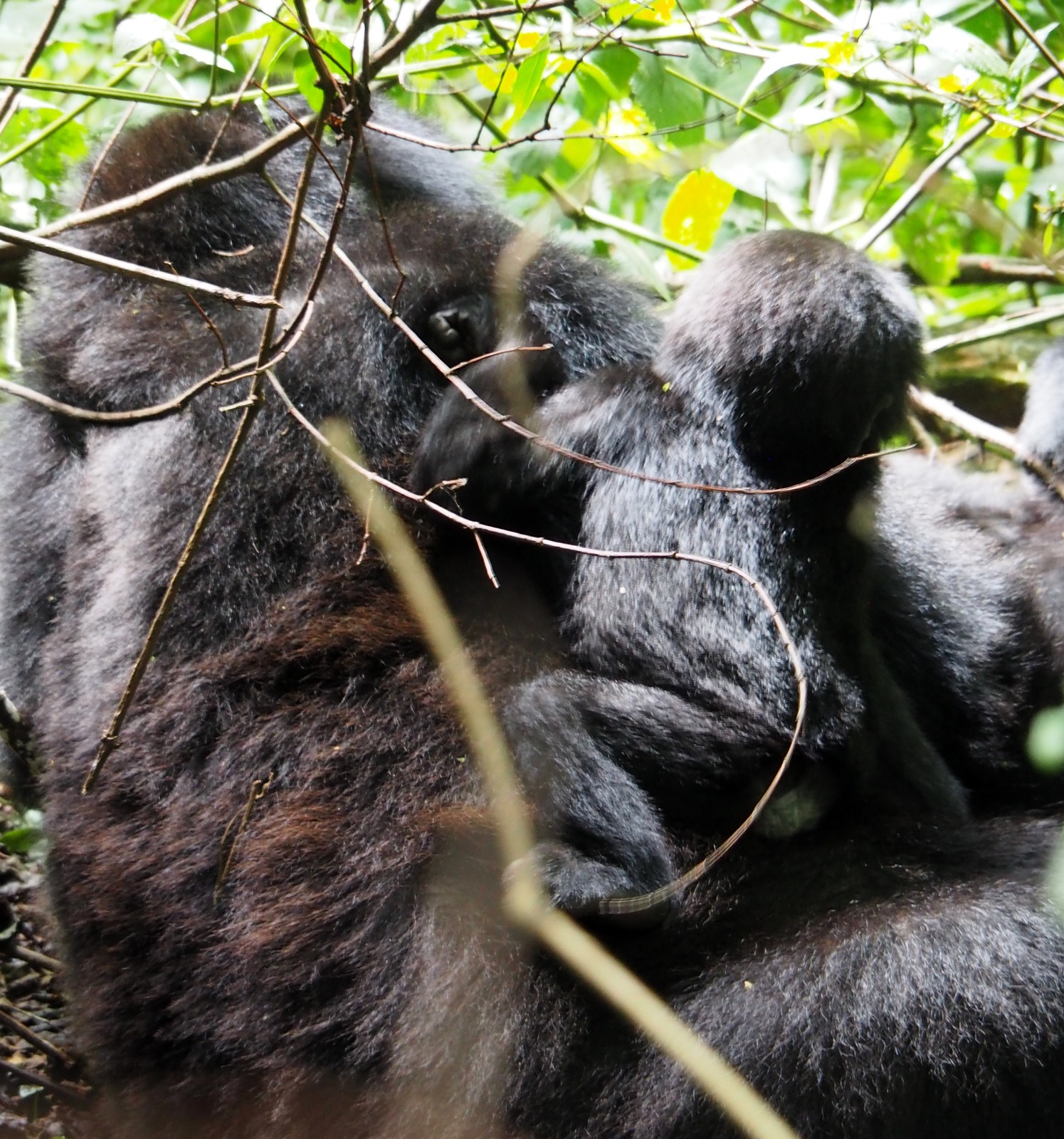
Uganda’s great-ape encounters are sometimes gathered under one broad image of forest trekking. Kibale deserves a more precise introduction. Its signature primate experience concerns chimpanzees, not mountain gorillas. Both are apes, yet they differ in body shape, movement, feeding and social organisation. Knowing which animal you are seeking helps set appropriate expectations and prevents the forest from becoming merely a backdrop to a generic wildlife photograph.
Chimpanzees can move quickly between the ground and the canopy, and much of their feeding takes place above a visitor’s eye level. Fruit is important in their varied diet, so the distribution of fruiting trees influences where they spend time. You might see an animal sitting high among leaves, descending a trunk or walking through the undergrowth. None of those possibilities is a promise. A clear view may be brief, and following activity requires attention to both the animals and the uneven ground.
The most satisfying encounter is not necessarily the closest or the most photogenic. Watching a chimpanzee choose a route through branches can reveal strength and judgement that a face-only image misses. Hearing several individuals answer one another can suggest a community beyond the visible party. Kibale’s distinctive appeal lies in this combination of mobility, voice and social complexity: a meeting with animals whose presence may fill the forest even when their bodies remain partly concealed.

Forest light and natural history
The canopy is a living structure
Look away from the animals for a moment and the architecture of Kibale becomes an attraction in itself. Tall trunks lift foliage into overlapping layers; climbers bridge spaces between trees; fallen timber opens little clearings at ground level. Sunlight arrives unevenly, illuminating one leaf while leaving the surrounding understorey dim. After rain, bark darkens and surfaces shine. These changes are not decorative details alone. They influence temperature, growth and the places where different organisms can make a living.
A forest is also constantly being dismantled and rebuilt. Fungi, insects and other decomposers work through dead material, returning nutrients to a system in which living roots and growing plants can use them again. Fruit links trees to animals, and animals can carry seeds away from the parent plant. Chimpanzees belong to this network, as do smaller primates and birds. An encounter with one conspicuous species becomes richer when its feeding is understood as part of the forest’s wider exchanges.
Kibale is not uniform throughout. Its protected landscape includes different forest conditions alongside areas of grassland and wetland, while the surrounding countryside introduces further edges and transitions. Even within a walk, the feeling can shift from an enclosed stretch of path to a brighter opening. Rather than expecting an unchanging wall of green, notice how the habitat varies. The distribution of light, moisture and vegetation helps explain why wildlife activity is uneven and why patient observation matters.
Primate and bird diversity
Beyond the chimpanzees
Chimpanzees may draw the first interest, but Kibale Forest wildlife extends well beyond them. Red colobus, black-and-white colobus and red-tailed monkeys are among the primates associated with this forest. Their different shapes and ways of moving make the canopy worth scanning even during a quiet spell. A long tail hanging beneath a branch is a useful reminder that not every dark figure overhead is an ape. Sometimes an entire patch of foliage seems to stir before individual monkeys become distinguishable.
These animals do not all use the forest in the same way. Colobus monkeys are strongly associated with leaf-eating, while other monkeys include more fruit and a wider variety of foods in their diets. Such differences allow several primate species to occupy the same broad habitat without leading identical lives. You do not need to memorise a species list to enjoy this diversity. Watching how an animal feeds, leaps or rests can be more revealing than collecting a name and immediately moving on.
Birdlife adds another layer, often first encountered by ear. Forest birds can remain hidden behind foliage, and a brief movement may be all that reveals one crossing the path. Wetland and woodland edges nearby offer different viewing conditions from the dense interior. Bigodi Wetland Sanctuary, a community-associated conservation area near Kibale, is one place to explore that contrast. The reward is a broader understanding of the region: not just its most famous mammal, but the many habitats and creatures around it.
An attentive encounter
Let the forest set the pace
Forest travel asks the body and the senses to work together. Roots interrupt the path, wet ground can be slippery, and looking upwards while walking is not always wise. There are moments to move and moments to stop. When a guide pauses to listen, the pause itself becomes part of the experience. Direction may be inferred from a call or fresh signs rather than an animal already standing in view. This gradual process can be as memorable as the eventual sighting.
Quiet observation also gives behaviour room to unfold. Keep to the distance and directions set by the ranger, never touch or feed wild chimpanzees, and do not pursue an animal for a better photograph. These are practical ways of respecting wildlife rather than obstacles to enjoyment. Chimpanzees need space to move, feed and interact without visitors turning each action into a confrontation. Current permits, access arrangements and ranger instructions should be checked with the Uganda Wildlife Authority before visiting; they should not be assumed from an old account.
Sightings and viewing conditions vary, and a forest encounter cannot be scripted. Rain may alter the atmosphere, foliage may obstruct a view, or animals may keep moving. Yet attention remains useful under almost any conditions. A camera can record what is visible, but it cannot replace listening or convey every change in the air. Leaving some moments unphotographed allows the encounter to retain its full setting: the calls, the trees and the movement beyond the frame.

Western Uganda beyond the canopy
Where the forest meets everyday life
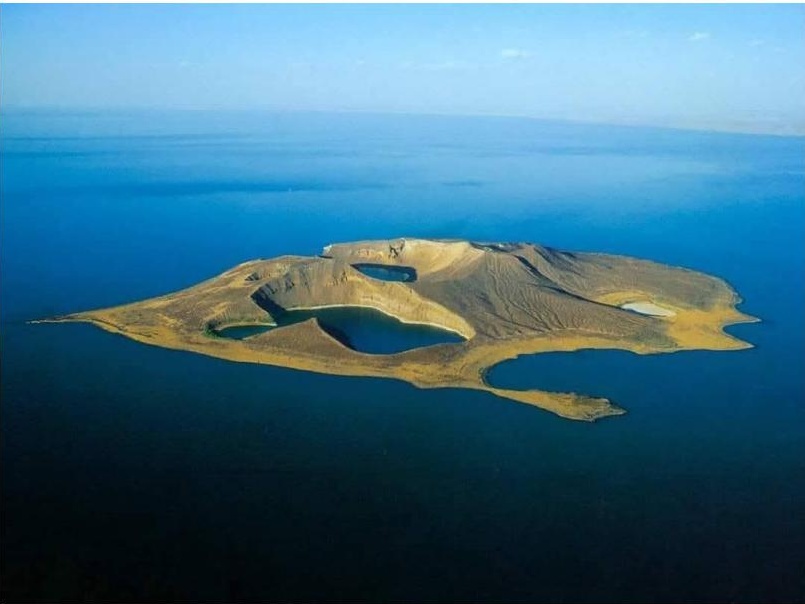
Kibale’s surroundings make the destination more than an isolated wildlife encounter. Near Fort Portal, the wider landscape includes green hills, cultivated land and crater lakes formed through volcanic activity. Seen together, they provide a striking change of scale: the intimate enclosure of a forest path gives way to slopes and water held within old depressions. These lakes are not features to attach casually to every view of Kibale, but part of the neighbouring region that helps give a visit its geographical depth.
The country around the park is also lived in and worked in. Farms, trading centres and roads connect people to livelihoods, education and one another. This is part of the wider Tooro region, with its own history and contemporary cultural life. Travellers can appreciate that context without treating residents as scenery or assuming a single encounter represents everyone. Where a community-led visit is available, listening to how people describe their own lives is more valuable than arriving with a ready-made story about them.
Bigodi offers a useful connection between nature and local participation in conservation and tourism. A wetland walk can shift attention towards birds, vegetation and the relationships between protected habitats and their neighbours. Any cultural exchange should remain an exchange, with permission sought before photographing people. The larger reason to look beyond the park boundary is simple: Kibale’s forest exists within a human landscape. Understanding both makes the destination feel less like a pin on a wildlife map and more like a place.

Explore with Friendslife Adventure
Let listening lead the way
In Kibale, curiosity often begins with a sound before it finds a shape among the leaves. Chimpanzee voices and movement in the canopy make this a destination for attentive travellers, not simply eager photographers. Friendslife Adventure is an appealing starting point for exploring it, with a tailor-made approach that invites you to explain what draws you to a forest encounter.
That conversation can go beyond the hope of seeing chimpanzees. You might want to understand their social behaviour, notice other primates or spend more attention on birds and the forest’s shifting light. Sharing your interests in wildlife, landscape and pace can help frame a visit around the way you enjoy discovering a place. It is also a chance to discuss the cultivated hills and everyday lives beyond the trees, without assuming that the forest exists apart from its neighbours.
Friendslife Adventure’s stated values of authenticity and responsible travel fit the spirit of approaching Kibale with openness and respect. The appeal is personal: a chance to turn fascination with forest voices into an experience that gives the surrounding world its due. Bring your anticipation, and keep listening for the unexpected. Explore Kibale further.
A little more to discover
Curious about visiting?
Is Kibale a destination for chimpanzees or gorillas?
Kibale is especially associated with chimpanzee tracking. Uganda’s mountain-gorilla encounters take place in other protected forests, notably Bwindi and Mgahinga. Chimpanzees are distinct animals with different movement, feeding and social patterns; a Kibale visit should not be imagined as a gorilla encounter.
Are chimpanzee sightings guaranteed in Kibale?
No. These are wild animals, and their movements, the vegetation and viewing conditions affect encounters. Chimpanzees may be high in the canopy or moving through the forest. Listening and observing the wider habitat remain important parts of the experience.
What else can visitors appreciate besides chimpanzees?
Kibale supports other primates, including colobus and red-tailed monkeys, as well as forest birdlife. Its trees, climbers and changing canopy light deserve attention too. Nearby wetland habitats, including Bigodi, and the wider crater-lake countryside add contrasting experiences.
What does chimpanzee tracking feel like?
It is an active forest experience involving walking, listening and periods of waiting or watching. Paths may be uneven or wet, and views can be partly obscured. Follow ranger directions, give animals space, and confirm current access and permit requirements with the Uganda Wildlife Authority.
More about the destination
Friendslife Adventure
Let the story become your experience.
Inspired to see it for yourself? Discover our journeys or talk to us about the places you would love to explore.